

What the Duck

In a ferociously comic retelling of a true story, Grace Sherwood (Anna Sosa, center) is put on trial for being a witch in 1706. “WitchDuck” is a locally-developed world premiere co-production written by noted speaker and actor Eva DeVirgilis. Photos by Jason Collins Photography
“WitchDuck” skewers misogyny in a wild world premiere from Cadence and Firehouse.
Originally published by Style Weekly
by David Timberline
May 12, 2026
People have an instinctive aversion to hard truths, particularly if they’re hit over the head with them.
The ferociously comic and persistently wacky “WitchDuck” manages to circumvent that aversion. Like a skilled magician, the world premiere play serves up so many antic hijinks as a diversion that the hard truths sneak in past any normal defenses.
Penned by Hampton Roads playwright Eva DeVirgilis, “WitchDuck” tells the true tale of Grace Sherwood, a midwife and widow who, in 1706, becomes the last woman convicted of being a witch in Virginia.
Don’t expect a pedantic recounting of this historic miscarriage of justice here, though. A gifted comic actor herself, DeVirgilis packs the play with a smorgasbord of scenes ranging from silly to surreal (though leaning strongly toward silly). The result may end up feeling slightly scattershot but the variety of comedic strategies employed guarantees that something will tickle your funny bone along the way.
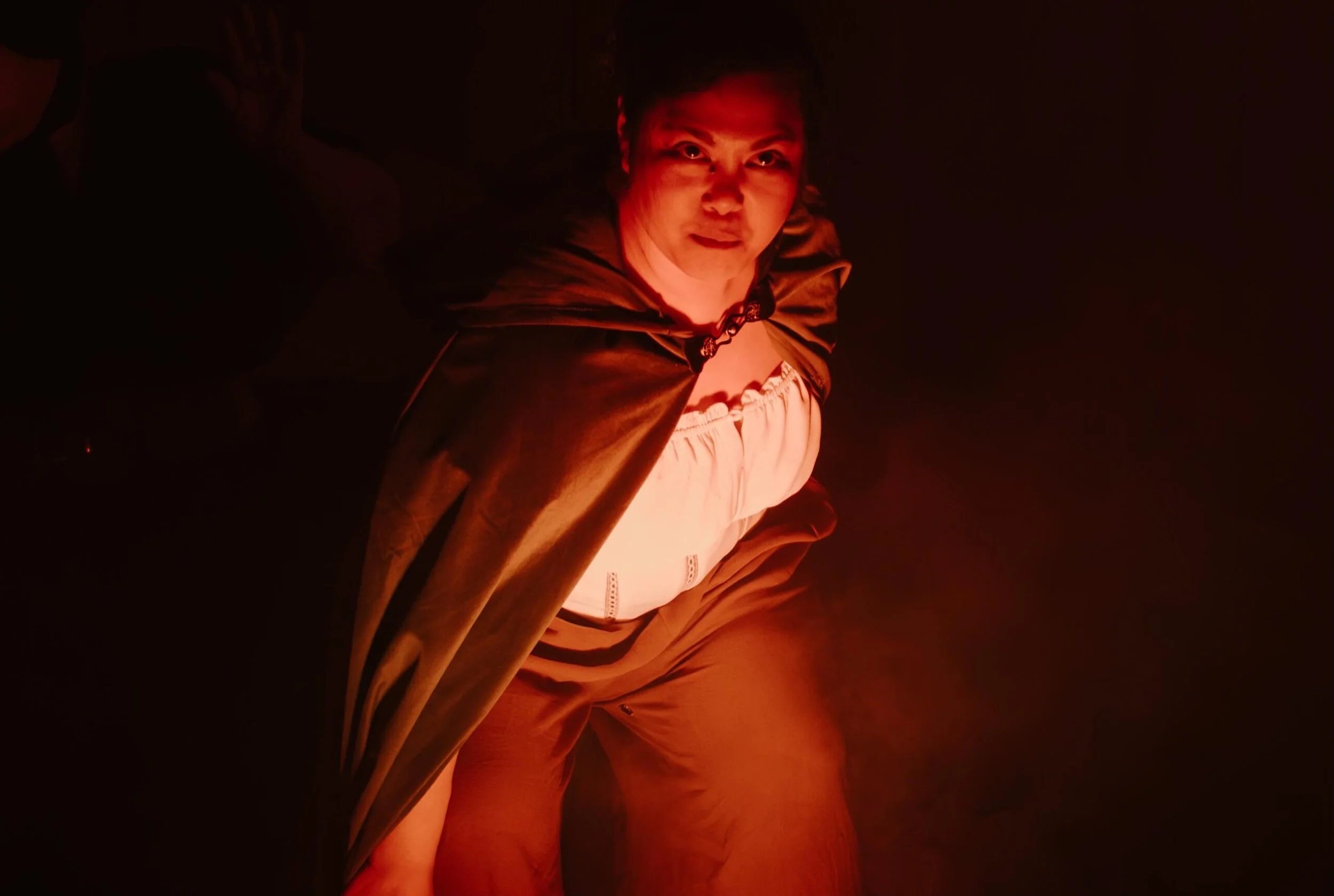
Sosa grounds the sometimes broad and slapstick comedy with her compelling performance.
The tone is set early on as Grace’s birth is celebrated by a chorus of well-wishers… until it’s announced that she is a girl. The “oh shit” response immediately telegraphs that a woman’s rights in America — and the abuse, humiliation and gaslighting endemic to her place in society — will be the principal subject of the action.
As played by Anna Sosa, Grace blossoms into an earnest member of her community in lower Norfolk (pronounced “nor-fuck,” the name is subject to repeated ridicule). Her skill in the “womanly” arts of midwifery already makes the male-dominated power structure uneasy and, when her husband dies, she falls prey to misogynist-in-charge Reverend Barry Mather (DeVirgilis).
A coterie of other women rally to Grace’s defense, inspired by Redd (Jacqueline Jones), a survivor of similar persecution in Massachusetts. Their efforts can’t save Grace from her ultimate fate: trial by drowning (or “ducking”) to prove her allegiance with demons.
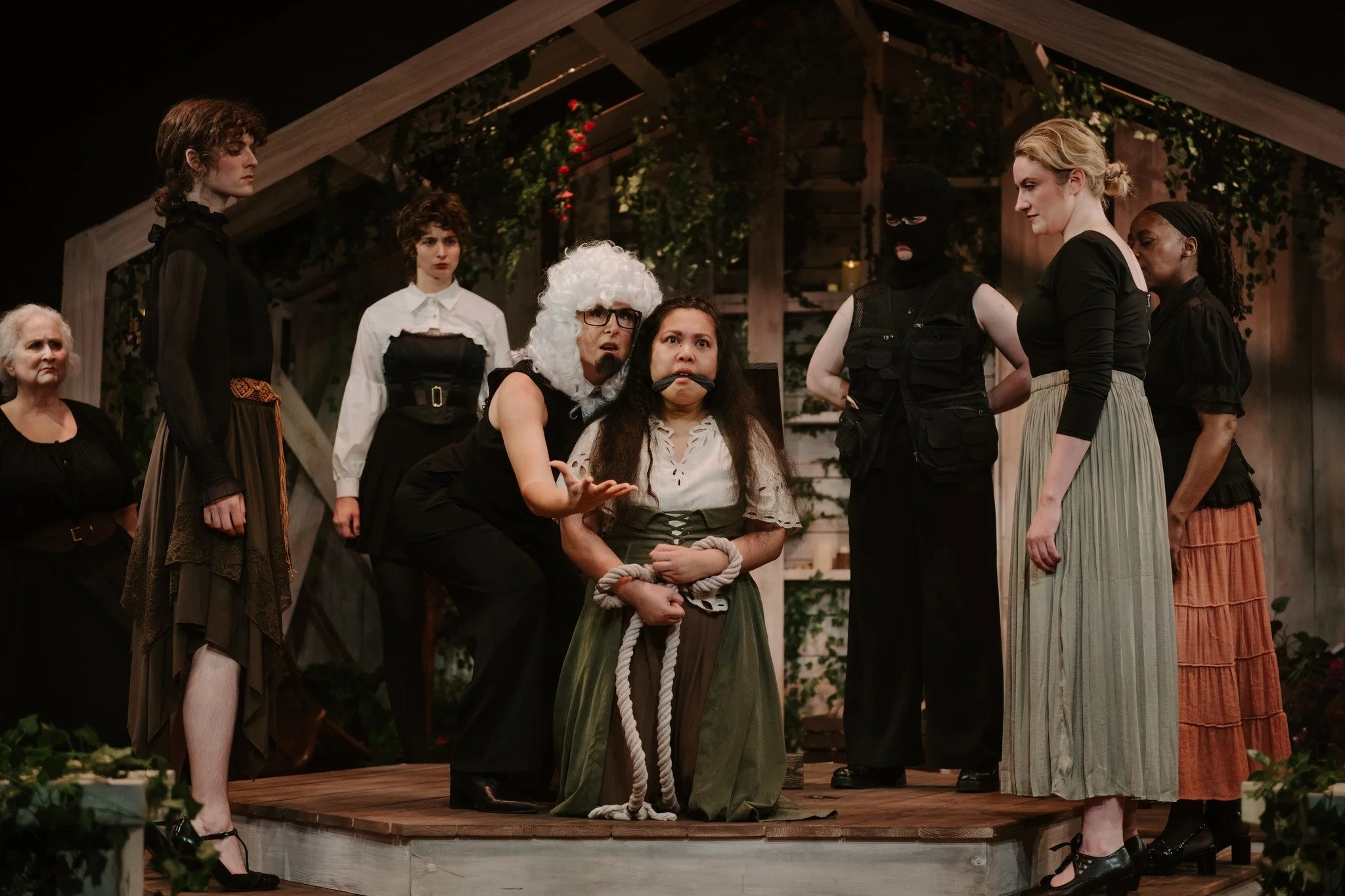
Reverend Barry Mather (played by DeVirgilis, center) preys on Grace after her husband dies, leaving her essentially without rights in colonial America.
While Grace’s story has a relatively happy outcome (and a pardon 300 years later by Governor Tim Kaine), by the end, DeVirgilis has laid bare how the pernicious devaluation of women persists to today.
Broad and bawdy humor runs rampant, helping that bitter pill go down. Amidst her garden of herbs and medicinal plants, the state of Grace’s “bush” gets mentioned several times. My favorite bits artfully play with the fourth wall like when it’s discovered the cast is too small to assign an actor to play Grace’s mother.
The whole manic enterprise would go off the rails if not for a grounded, empathetic performance at its center. Sosa delivers the pathos, playfulness and power of Grace with assurance, providing a hero it’s easy to root for. Daniel Allen’s atmospheric set design also provides a solid anchor for the proceedings that then gets cleverly tweaked by Ruth Hedberg’s costumes, an evocative mix of colonial and contemporary motifs.
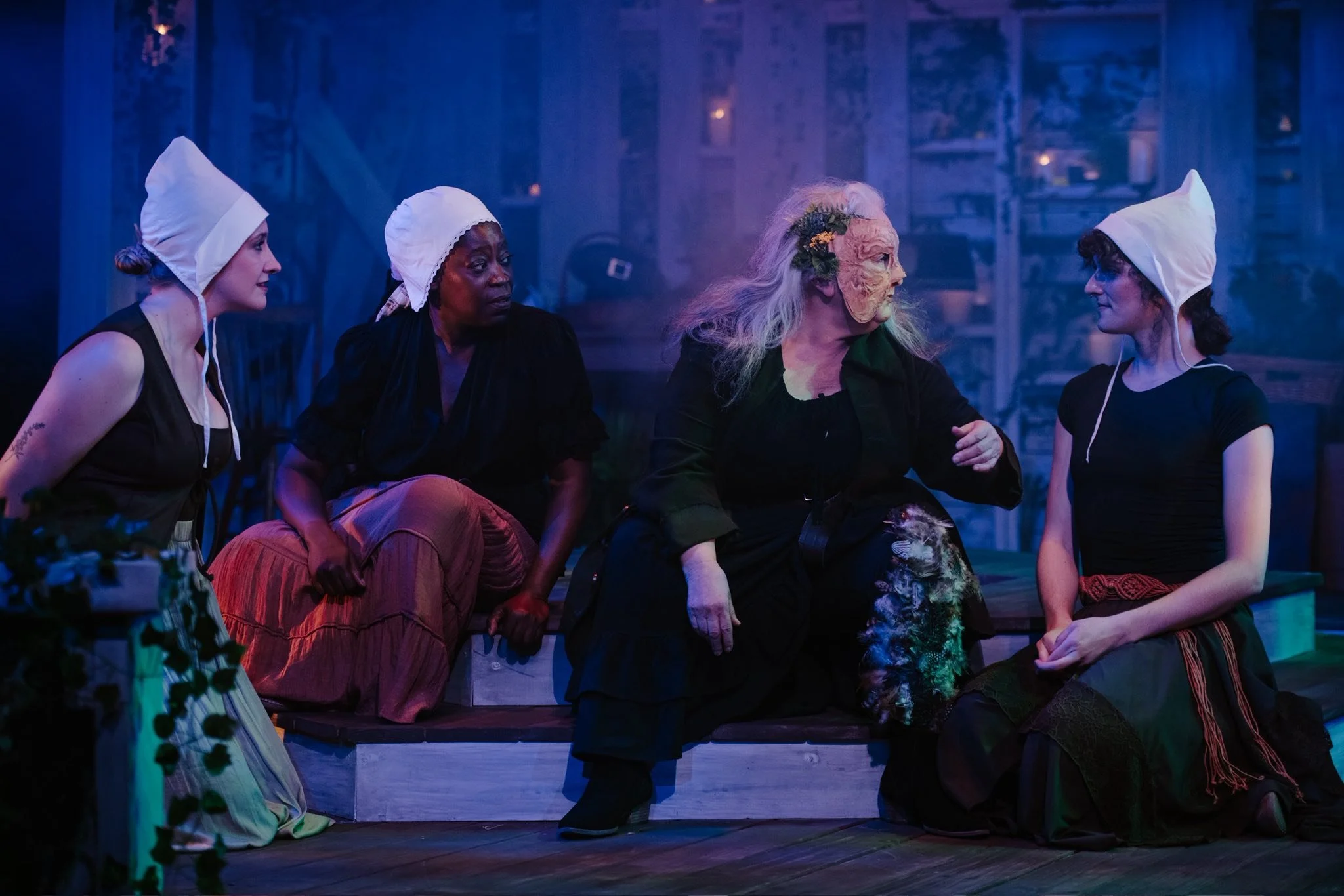
Redd (Jacqueline Jones, without bonnet), a survivor of similar persecution in Massachusetts, rallies other women to Grace’s defense.
Director Rebecca Wahls manages to keep the action popping at an almost vaudevillian pace while still leaving space for moments of honest emotion, like in the revelatory monologue by Winiford (Mary E. Hodges) about menopause.
Amidst the slapstick, some characters offer slightly more subtle commentaries on contemporary issues, like Elizabeth (Lili Marchesi), who appeases the sexist hierarchy for the precious few scraps of privilege it doles out.
Perhaps ironically, the buffoonery of DeVirgilis’s Mather makes him less scary than other players like low-key bro, Luke (Rachel Garmon), or the guard who preps Grace for trial (Olive Gallagher). Luke’s slimy propensity for sexual abuse or the guard’s unironic “your body, your choice” line end up being bracingly believable, thanks to spot-on portrayals by the consistently exceptional cast.
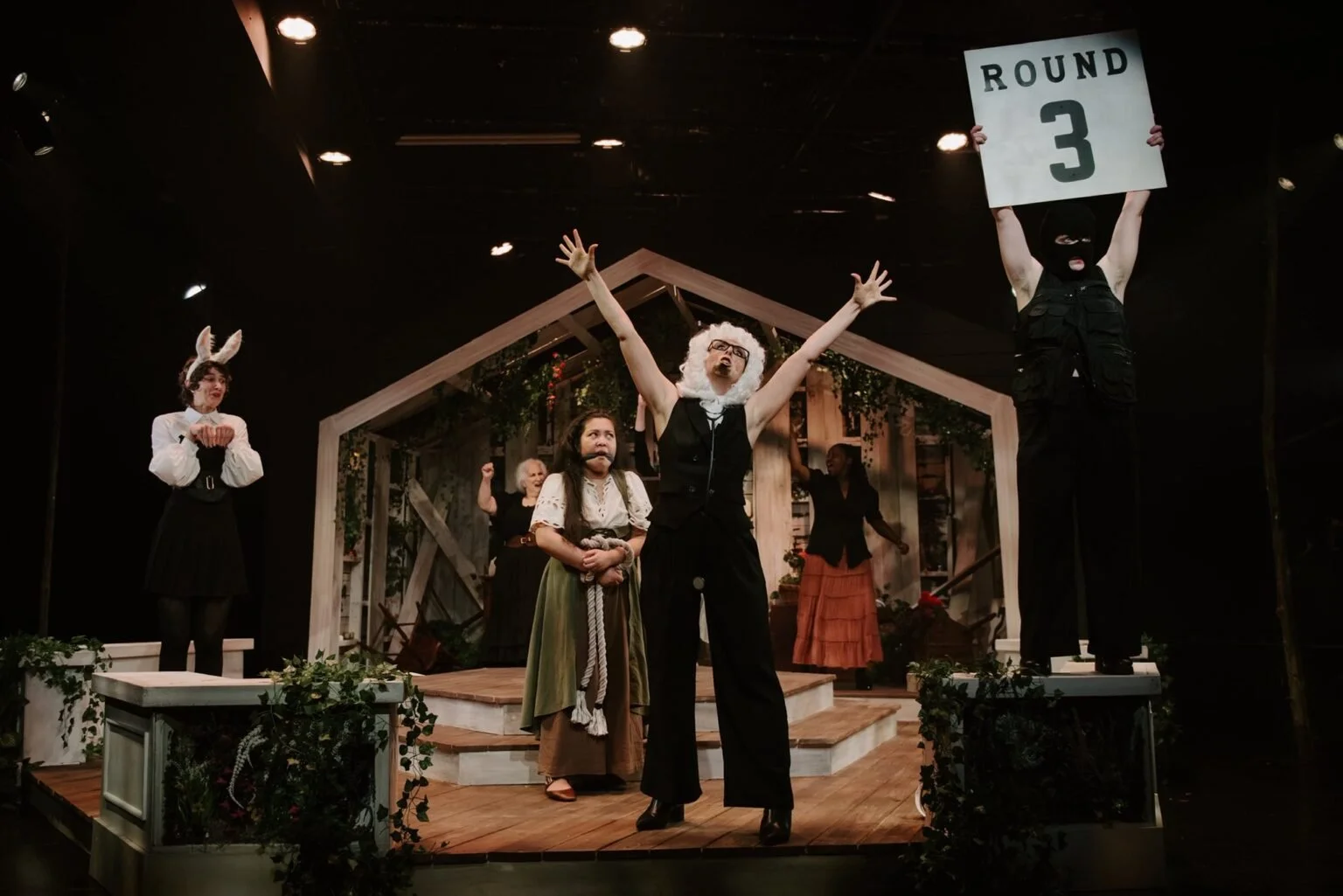
The broad and often bawdy humor of “WitchDuck” helps to mask the brutal truths embedded in its story.
The potential pitfalls of the play’s approach are embodied by the character of Margaret (expertly played by Rachel Marrs), who blithely accepts her husband’s ludicrous demands even after he implausibly cuts off her arms. Her emergence from the fog of delusion to become Grace’s ally is a winning plot turn but it’s hard to look away from the matter-of-fact brutality.
The brutality lurking beneath the comedy is the point, of course, and the uncomfortable juxtaposition of those elements give the play its compelling frisson. Like a dose of pumped-up Monty Python, “WitchDuck” keeps you laughing at its madness while simultaneously revealing how truly crazy our reality can be.
“WitchDuck” runs through May 24th at Firehouse Theatre, 1609 West Broad Street. A co-production from Cadence and Firehouse, tickets and more information can be found both at https://www.cadencetheatre.org/ and https://www.firehousetheatre.org/.
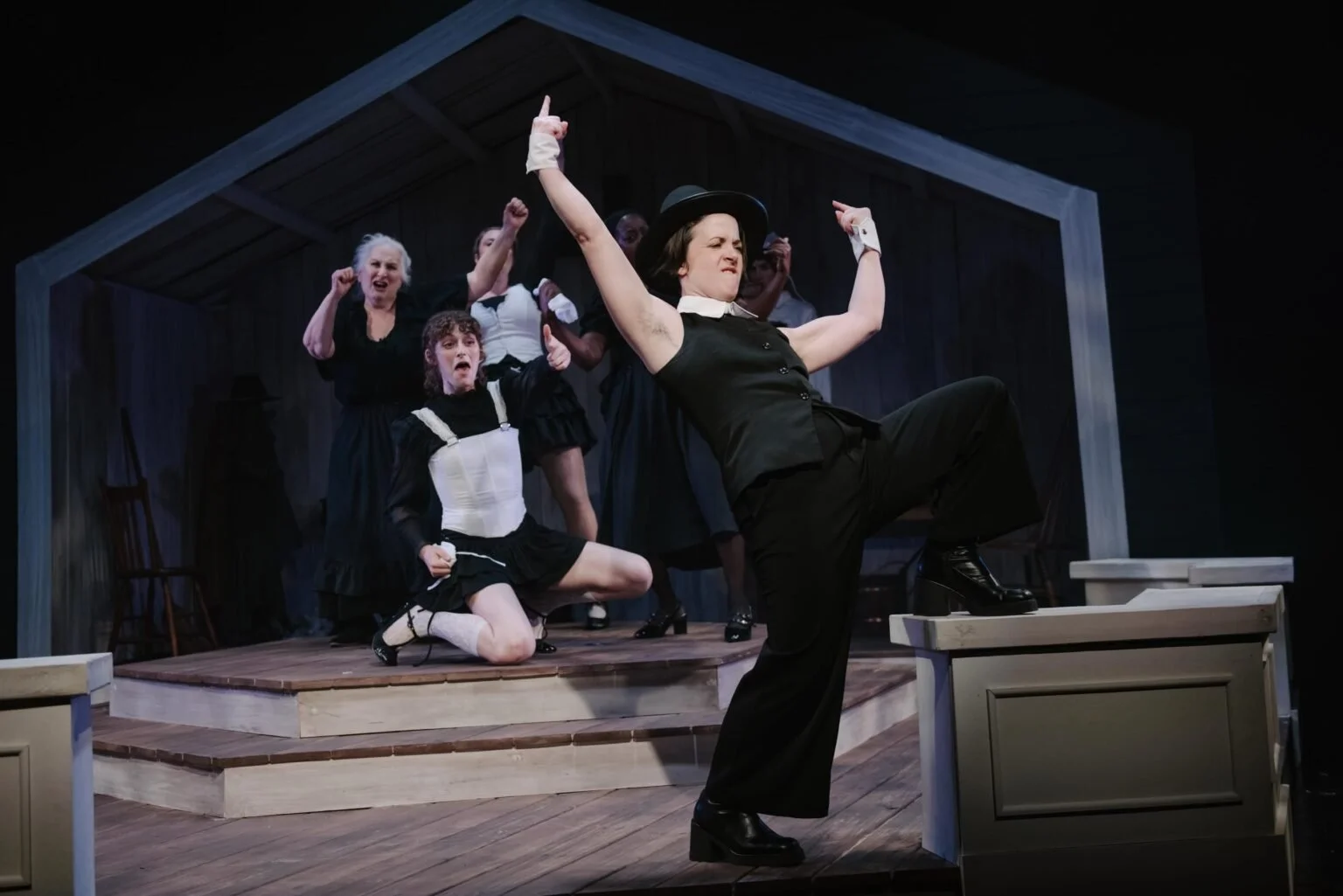
The pernicious misogyny reflected in more low-key characters, like the dude bro, Luke (Rachel Garmon, center) ends up being more disturbing than the behavior of some of the more buffoonish characters.
