

‘Love & Vinyl’ Is a Rom-Com Set and Staged Inside Plan 9
Originally published by RVA Magazine
by R. Anthony Harris
February 5, 2026
Record stores have always been more than retail. People go in saying they’re just browsing, but that’s rarely the whole story. It’s a treasure hunt. They’re chasing a feeling. They’re hoping to recognize themselves in someone else’s taste.
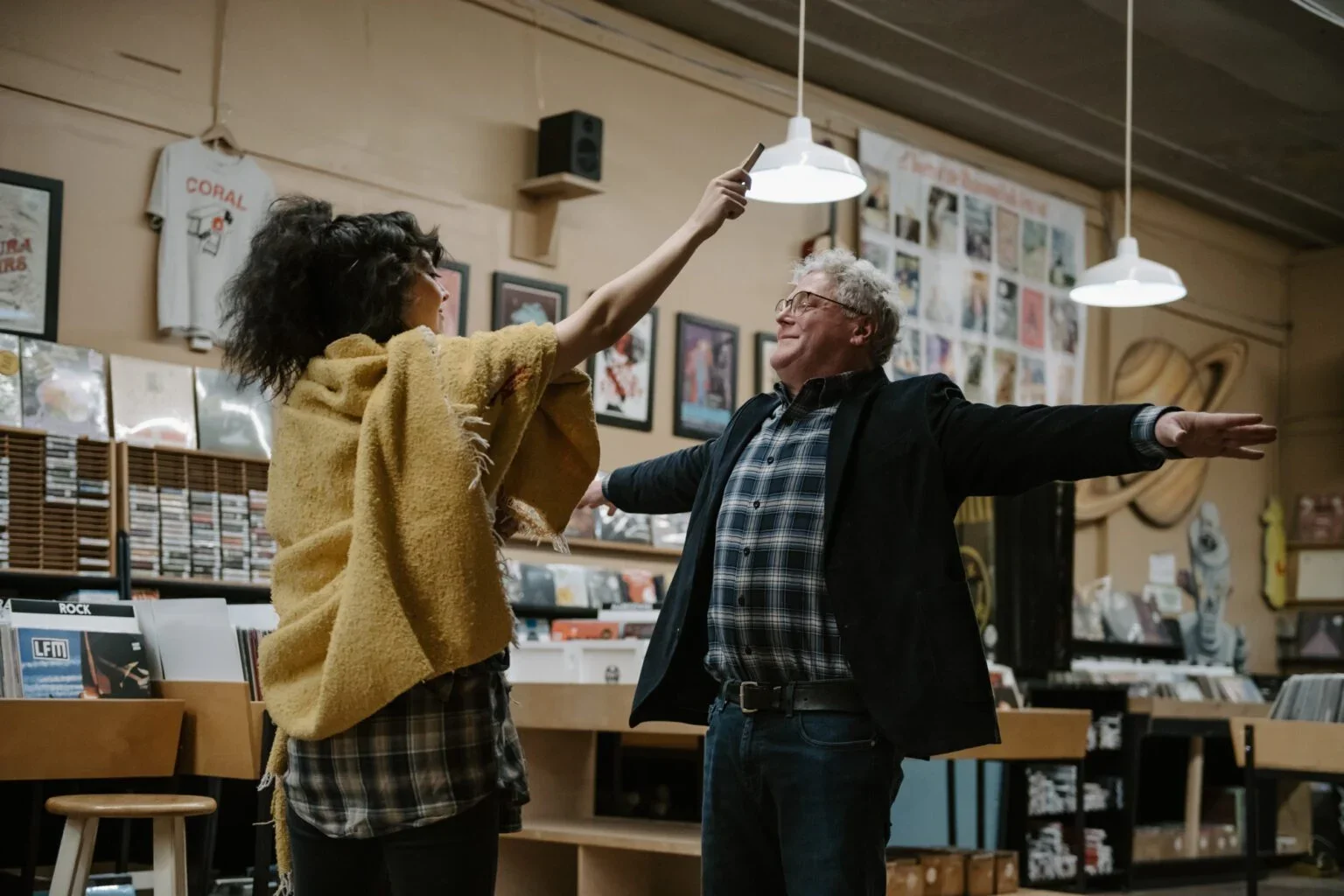
That’s why Plan 9 Music makes sense as the setting for Love & Vinyl, a site-specific romantic comedy by playwright Bob Bartlett, produced by Cadence Theatre Company. The play doesn’t simulate a record store onstage. It takes place inside one. The audience sits among the shelves and turntables, watching a story unfold in a space that already carries decades of memory and habit.
Bartlett has spent the last several years writing plays meant for real locations rather than traditional theater spaces. Laundromats. Cemeteries. Record shops.
“I’ve always been a writer where story emerges from geography and then character,” Bartlett said. “I’m drawn to a location first, and then I ask who lives here, who works here, who fights here, who loves here.”
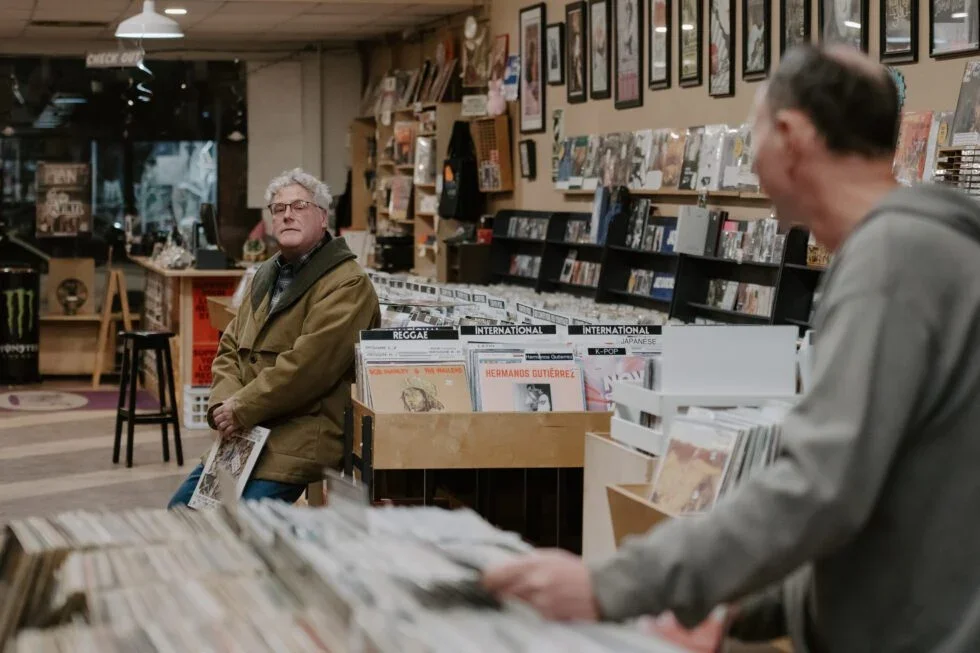
Love & Vinyl is the most successful of those plays so far, likely because it doesn’t overcomplicate what it’s about. A shy regular who cannot bring himself to ask out the woman who owns the record store. A woman who has stopped believing romance is worth the trouble.
“It’s a tried-and-true romantic comedy,” Bartlett said. “Guy wants to ask out girl and can’t get the courage. Girl wants nothing to do with romance anymore. The audience just wants to know, are they going to end up together?”
What gives the play its weight is not the plot, but the environment it lives in.
“These shops are totally indie now,” Bartlett said. “There are no chains anymore. They’re all mom-and-pop situations. The people who own them are obsessive, passionate, and interesting. Being around them is half the fun.”
Music is not background noise in Love & Vinyl. It’s the shared language that allows these characters to exist in the same space without retreating into themselves.
“The commonality is the music itself,” Bartlett said. “For people who love music, it’s hard to imagine not listening every day. The first thing I do when I wake up is turn on the stereo. It’s the last thing I do at night.”
Bartlett is open about the autobiographical bleed. He sees pieces of himself in all three characters. The anxious overthinker. The devoted completist. The person behind the counter who has seen enough to be cautious, but still shows up. Much of the record store lore in the play comes directly from conversations with shop owners and customers.
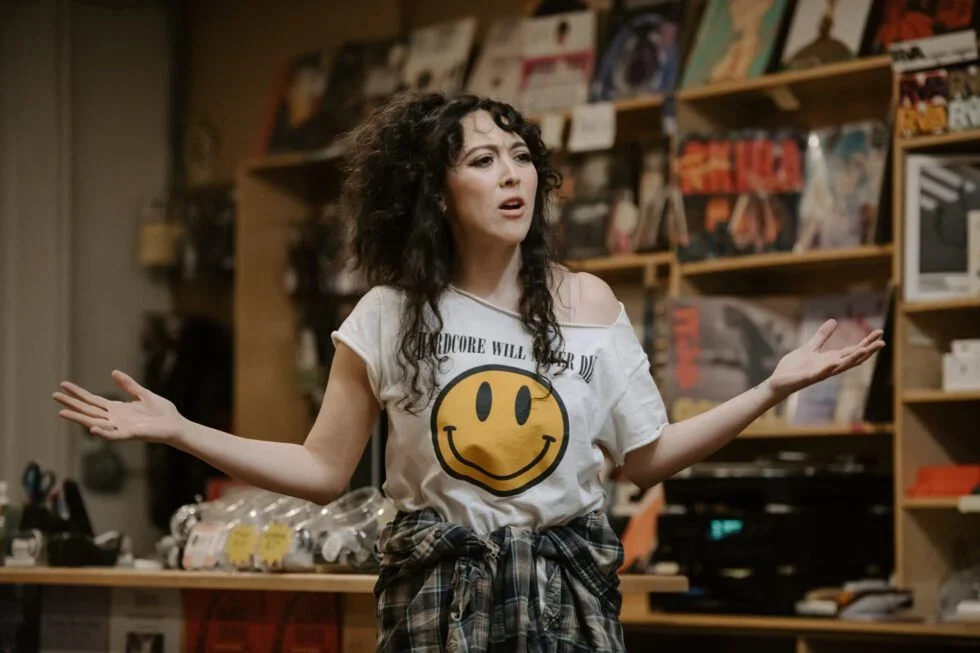
One of the most affecting moments in Love & Vinyl grew out of a story a record store owner shared with him. People sometimes leave crates of records outside shops with handwritten notes explaining where they came from. That idea appears directly in the play, most clearly in a monologue delivered by Sage, the record store owner.
“Dead people’s records.
Sometimes I find crates left in front of the shop, sometimes with a note.
My son loved coming here, and he bought most of these here over the years. They gave him so much pleasure and peace, especially in these last few months, so he wants them to move on to someone else. Someone who wants them. Who needs them. And whose life they’ll change.
Too often, a haul like this would end up in recycling or a landfill, or shoved into a thrift store nickel bin. And maybe it should. But not this vinyl. Not this son’s vinyl. Aretha Franklin. Linda Ronstadt. Sam Cooke. Johnny Cash. A Tribe Called Quest. The Clash.
This crate should go into space. Or into a time capsule. So that someone far in the future, or in some other galaxy, could know how beautiful we could be.”
The speech doesn’t argue for vinyl as nostalgia or novelty. It frames it as practice. And what keeps vinyl alive has little to do with sound quality. “There’s something about the scratchiness of the needle that is so attractive to us,” Bartlett said. “It hits some emotional, romantic circuitry in us. It’s just fun.”
More than anything, vinyl changes how you listen. “It slows you down,” he said. “It makes you listen.”
That slowing down is the connective tissue of Love & Vinyl. Records aren’t just the setting. They’re the mechanism. The ritual of browsing, listening, returning week after week creates a space where people are forced to be present with one another. That ritual is articulated again by Sage in another of the play’s central monologues:
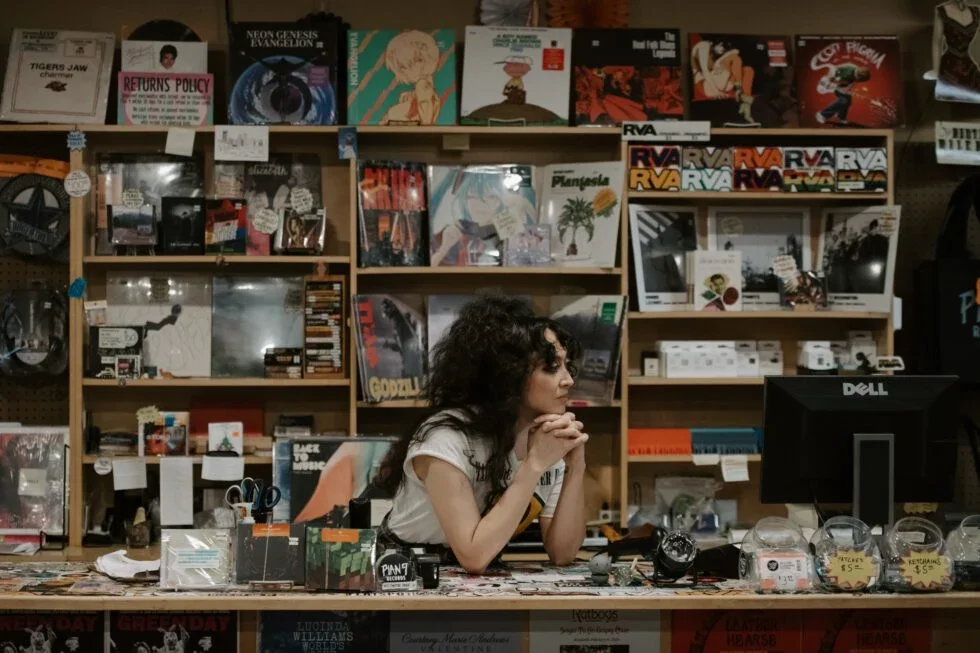
“Sometimes I stand here, frozen, overwhelmed, almost paralyzed, unable to choose, hoping the record will choose me. That I’ll find just what I want to hear to match my mood, or put me in a mood, or match the vibe I need with the need of the room.For those of us whose life is vinyl, who live above a record shop, who work all the time, who share and consume music every day, 365 days a year, this is the ritual.
A great song imprints itself onto us. It reminds us of home, of a time when we believed we were safe and loved. We hear it once, then again and again, until it’s blasting from a boom box and we’re crying in the middle of the woods because we’re in love with the wrong person. The soundtrack of our youth is never far away. We spend our lives chasing it down, or running from it, until decades later we inexplicably love it again.”
“The play is really about courtship now,” Bartlett said. “Making real connections is harder than it used to be.”
In the world of the play, records do what technology often short-circuits. They slow interactions down enough for something human to happen. You can’t swipe past someone in a record store. You have to stand there. You have to listen. You have to risk the awkward pause.
For Bartlett, that analog friction is the point. By staging the production inside Plan 9, Cadence isn’t chasing novelty. They’re placing the audience inside one of Richmond’s most durable cultural spaces and letting the story happen at human scale.
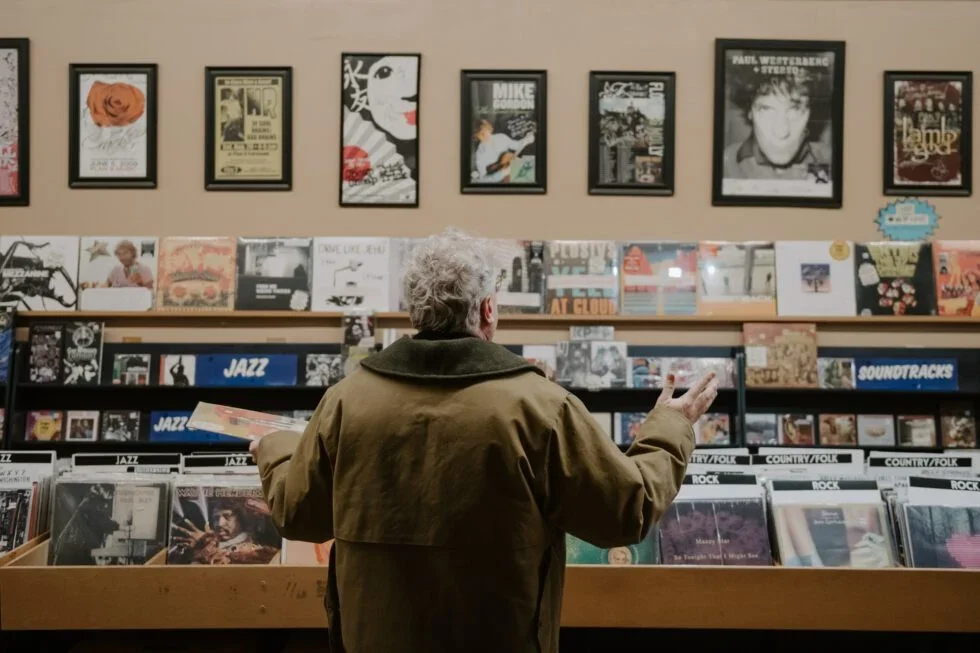
Love & Vinyl doesn’t argue that things used to be better. It just pays attention to the places where people still try. That attention culminates near the end of the play, when Bogie finally says what the evening has been circling.
“Because I need more from this life, this one life, than a scroll and click and download.
I’d much rather spend hours with a friend, walking through the downtown lights in a warm rain, and finding a tiny out-of-the-way shop, and flipping through racks of vinyl to see if they have that unknown band we love. Even though we’re not going to buy it because we already have it all. We just want to see that someone else loves what we love.
And leaving with a band we’ve never heard. Or one we’ve loved for all of our lives. And sitting on a hardwood floor in a shitty apartment with a bottle of wine and a turntable that works in zero gravity, with no gravitational pull other than the one coming from us.”
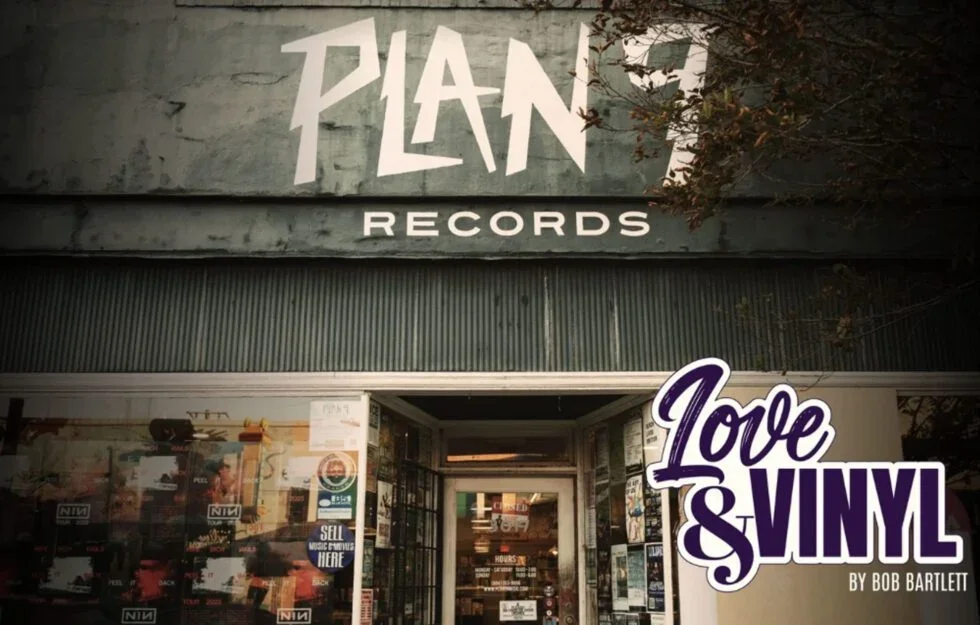
Love & Vinyl runs February 6–22, 2026 at Plan 9 Music in Carytown. Several performances of Love & Vinyl will also open with live music, further blurring the line between the play and the space it inhabits. Select nights will feature short pre-show sets by local musicians including Dhemo, Odd Junction, Shera Shi, Erin Lunsford, Deau Eyes, Hotspit, Logos The Poetic, Isaac Friend, and Sweet Bahs.
Get your tickets HERE.
Photos by Jason Collins
