Behind the Scenes: The Taylows
The past is never far behind. Especially when the past is generations of racial injustice.
Interview by Liv Wilson
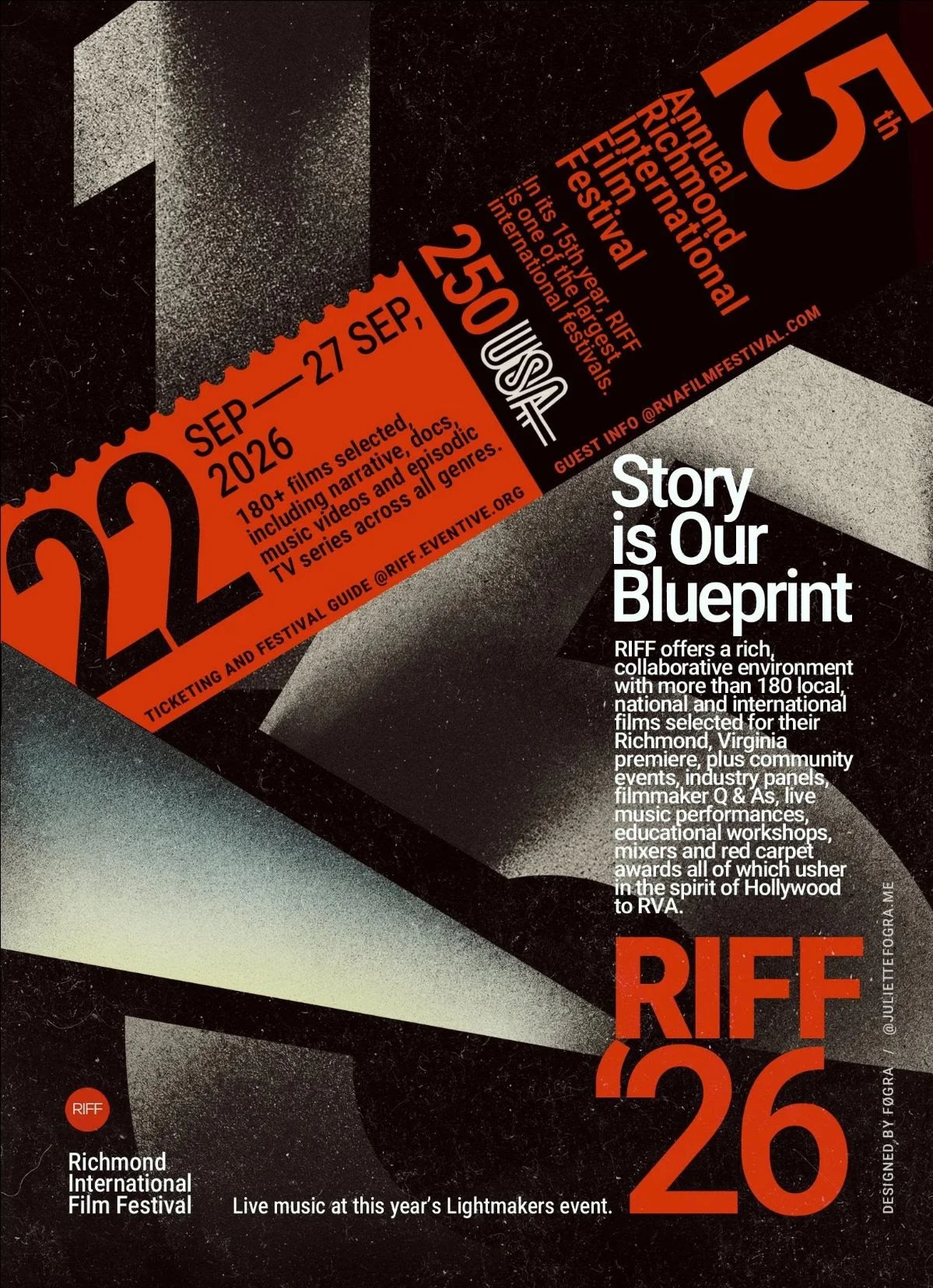
On September 22nd, Cadence’s film The Taylows will premiere in the 15th Annual Richmond International Film Festival’s Virginia Short Film Block. Directed by Omiyẹmi (Artisia) Green, the three-part short film anthology follows the fallout of a Richmond teenager’s sudden disappearance, revealing a chilling legacy of greed, tragedy, and supernatural vengeance—a legacy the Taylow family has cast over their community for generations.
A powerful drama with a nod toward mystical horror, The Taylows explores themes of racial inequality, gentrification, identity, and domestic violence. Developed and filmed over several years, The Taylows is deeply rooted in Richmond, Virginia– both past and present– exploring the city’s long history of social and racial injustice in the American South. The anthology explores how Virginia’s complicated history continues to shape the lives of those living in its shadow.
Directed by Omiyẹmi (Artisia) Green, an award-winning artist and scholar whose work bridges Black Theatre, research, performance, and pedagogy, The Taylows brings together a multidisciplinary team of artists and filmmakers. Michael Duni and Alexyn Scheller serve as Directors of Photography, with an original score composed by Joey Luck. We spoke to members of the creative team about their involvement in this piece.
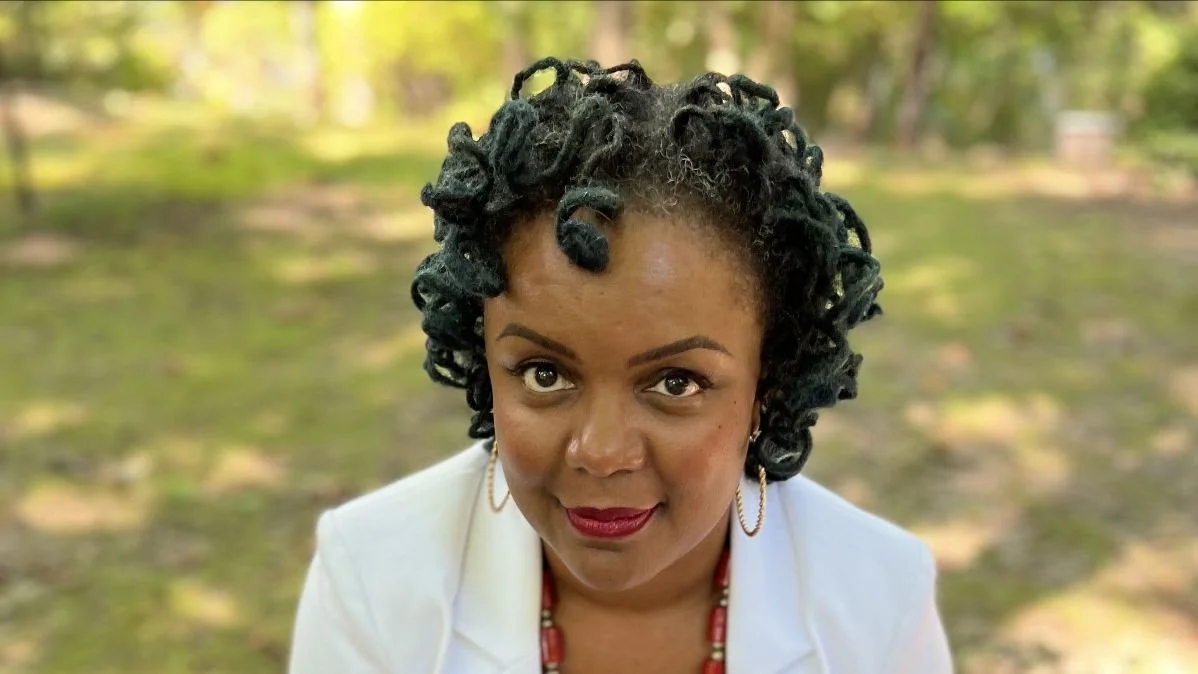
Omiyẹmi (Artisia) Green, Director.
Tell me a little bit about the genesis of this project. How it originated and how it has transformed in the last several years.
Omiyẹmi (Artisia) Green (Director): The Taylows was my first full-length film project as a director. The project began during the COVID-19 pandemic as Bloodlines, a web series. I entered the project as a director in June 2022, when I was invited to direct the prologue for Episode 2, a scene that featured my youngest son, Isaiah, as Young Samuel. Over time, I was invited to direct additional episodes, and eventually the project evolved into The Taylows. Thus, my relationship to the project—Bloodlines/The Taylows—was a unique creative experience in which early on I helped to shape a story that was already in motion while later learning the language and practice of filmmaking on a much larger scale.
Through the evolution of the project and my role in it, the image of a rare diamond and the stories that were attached to it as it moved through different hands across time stayed with me throughout the project. That object eventually became the connective thread that allowed me to explore larger questions about race, power, ownership, and historical memory. The more I developed the story, the more the diamond became a way of tracing how injustice replicates itself across generations and how wealth and power are often built upon histories that remain obscured or forgotten.
Michael Duni (Director of Photography): The Taylows began as a web series called Bloodlines, briefly turned into a feature film, and ultimately became a three-part anthology of short films. I was a small part of the early filming, but it wasn't until about three years later that I joined as a cinematographer, editor, and executive producer. The story always had strong messages, so the process became about using our years of existing footage to sculpt something that honored the intent of the story.
Alexyn Scheller (Director of Photography): This has been such an interesting project to be part of. I became part of the project back during the beginning of Covid, when I was sharing some of my photography work around Church Hill that caught Anna's eye. I joined to help with some of the cinematography and drone footage, and quickly evolved from there. What started as an experimental web series transformed into a full blown multi-episode series involving dozens of characters that combined horror, drama, and an introspective look into some of the more dark and racist roots of Richmond's complicated past.
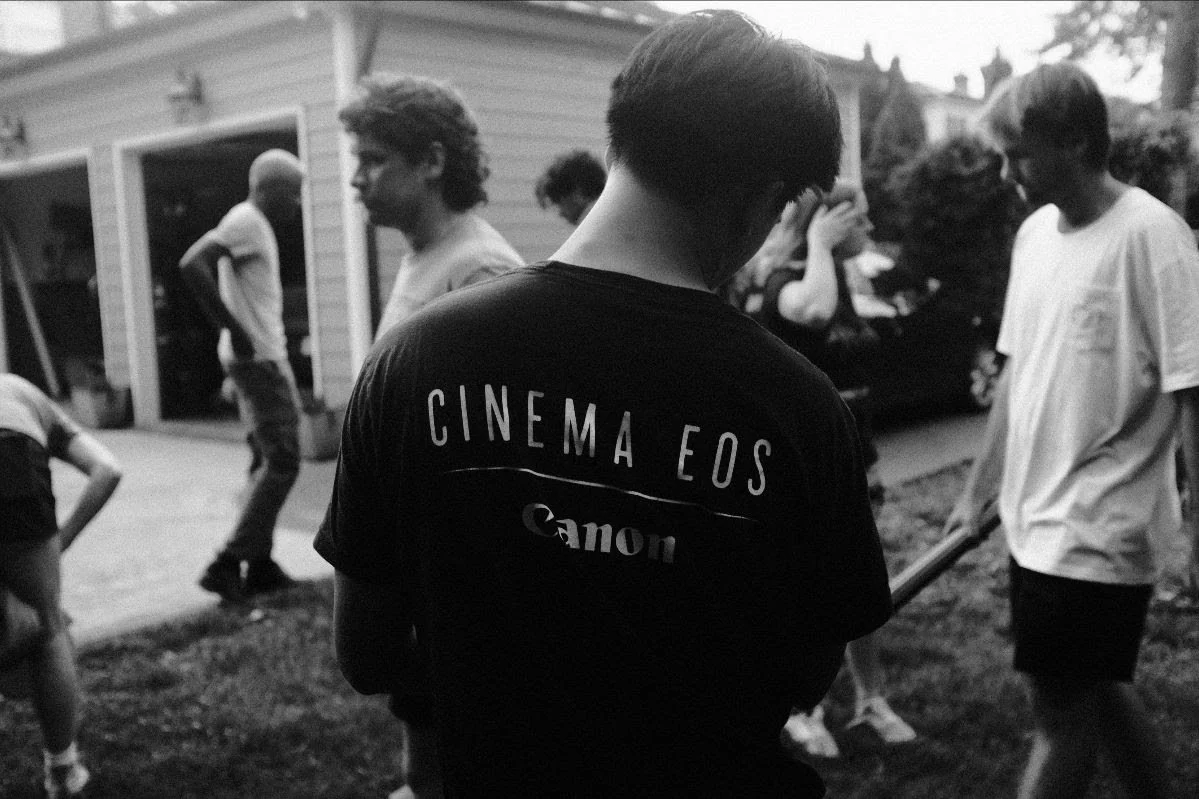
There were a lot of young people involved in the making of this film. Tell me a little bit about what it was like to have them on set, their engagement, and what you hope they got out of the experience.
Green: One of the most rewarding aspects of the project was working with young people, including my son, for his brief cameo. Overall, they brought an energy, curiosity, and openness that continually strengthened the process. Many of them were encountering aspects of filmmaking for the first time, and there was something exciting about watching them discover how many different forms of creativity and problem-solving are required to bring a story to life.
I hope they came to understand that filmmaking is inherently collaborative and that every role contributes to the final product. Whether someone was performing, assisting behind the scenes, helping with production logistics, or participating in story development conversations, they were contributing to a collective creative effort.
Duni: Students worked as writers, actors, and crew members throughout the entire process, gaining real filmmaking experience and walking away with something to show for it. We even made sure to provide the students with all of the additional footage we captured over the years, scenes for their acting and filmmaking reels as they begin their professional lives. I hope students walked away with a better idea of where their artistic paths might lead, and with more insight as to how they want to tell their stories.
Scheller: Working with so many kids for so many years to make this vision come to life was amazing. This was many of their first time working on film, and it was during a time (Covid) when a lot of them were not able to get traditional stage experience they may have been getting during the pre-college experience. But their skill, energy, and fun they brought to filming really is what kept this project going for so many years. I really could never have imagined they would be such good actors, and such fun to have on set.
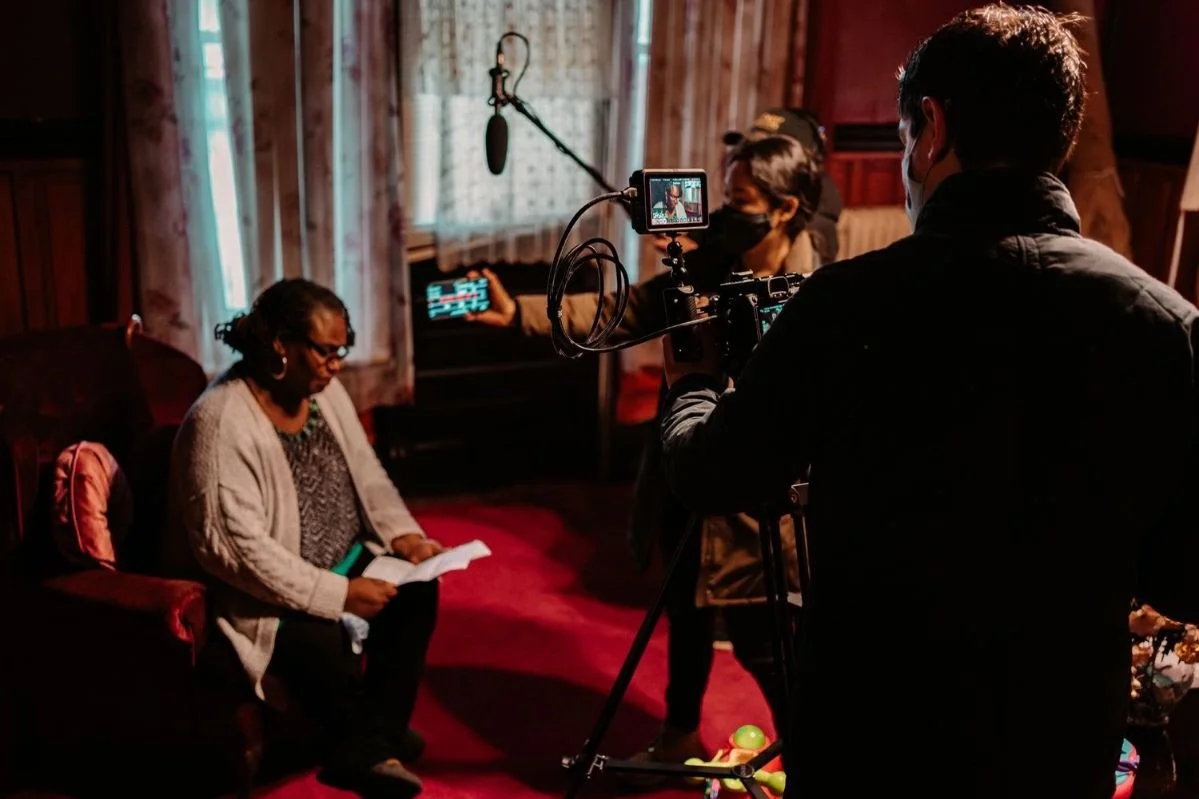
How do you conceptualize the direction of a film? How does directing on stage versus for film differ for you? What is collaboration with the production team like?
Green: At their core, directing for stage and directing for film are similar. In both cases, you're shaping an audience's experience and helping actors tell a story truthfully. The difference is that theatre and film speak different visual languages. In the theatre, the audience decides where to look. In film, the camera decides. That changes everything.
While directing The Taylows I was learning and creating at the same time. Filmmaking required me to think differently about visual storytelling, pacing, framing, editing, and the relationship between the camera and the audience. I came to see the camera as an instrument of excavation, revealing history layer by layer and uncovering what had been hidden.
I was fortunate to work with exceptionally talented collaborators. Michael Duni, whom I had previously worked with as Director of Photography on Brittany Fisher's Bleach, became both a gentle teacher and a strong advocate for the fullest expression of my vision. Some of my favorite moments emerged through our creative exchange.
Other times, the environment itself became a collaborator. Rather than adhering rigidly to a shotlist, I often found that a location would reveal something unexpected. I would notice something very specific—a book, or the way the paint was peeling on the wall, a visual relationship between people and space, or even the way a room felt energetically—and Michael and I would stop, talk it through, and build the shot together in real time. Working on this film reminded me that the director’s vision is not always something you arrive with; sometimes it is something you uncover through collaboration.
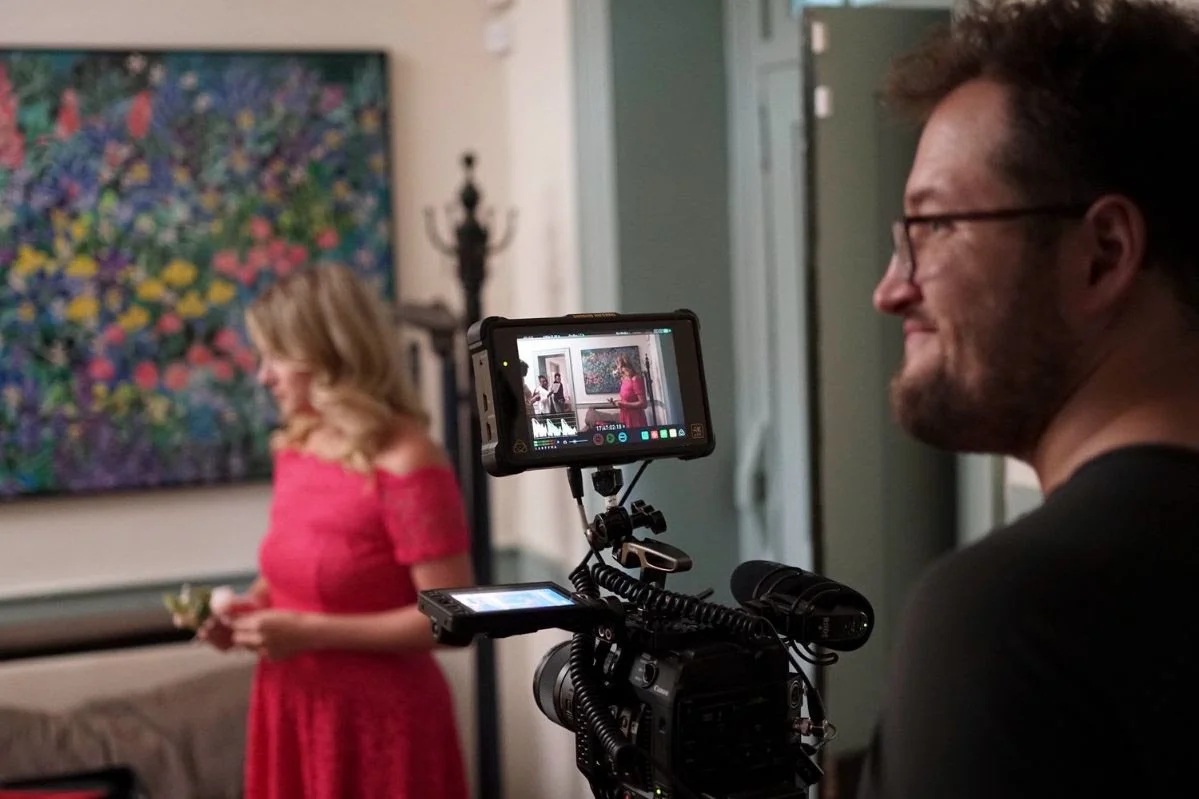
What is your approach as a Director of Photography? When editing, how do you decide what stays in and what gets cut?
Duni: I helped Alexyn film some of the modern-day storyline and came on as a second director of photography as we moved into production of the '80s story timeline. We really wanted to stamp each era of the story and firmly establish it within its respective time period. This was a really fun balancing act: leaning into the filmmaking style of the '80s while staying within the established world of the film.
The Taylows is a drama/horror piece. How does genre impact the way you approach the work?
Green: I've always been attracted to horror as a genre because of its ability to make invisible forces visible. In many ways, making invisible forces that often operate just beneath the surface of everyday life visible is both a methodology and a theme throughout my work.
For me, the horror in The Taylows is not simply supernatural. It grows out of unresolved histories, inherited inequalities, collective memory, and the consequences of actions that continue to reverberate long after the people responsible are gone. The genre gave me a way to explore a question that sits at the heart of the film: What happens when history refuses to stay buried?
Duni: Making a horror film is always fun, and it's even better when you get to incorporate real messages and themes. The horror becomes less about jump scares and more about pointing to some of the horrific elements of our own reality—and, of course, there are some jump scares, too.
Scheller: I think you have to do this with care. The subject matter needs to be both scary, and grounded in reality. Richmond is an amazing city, but it really is built on some very dark history. This story tried to dramatize that very complicated history and focus narrowly on several characters to bring that history, both the drama and horror of it, to life.
Tell me a little bit about the themes surrounding the legacy of racial inequality in the South. Which topics feel particularly salient to you? Are there messages or moments you hope will stick with audiences?
Green: One of the questions at the center of The Taylows is deceptively simple: What is inherited? We often think of inheritance as property, money, or family heirlooms. But we also inherit systems, assumptions, opportunities, disadvantages, silences, and histories. The journey of the diamond became a way of exploring those larger questions. As it passes from one person to another, it reveals patterns of dispossession, exploitation, resilience, and survival. The film asks viewers to consider how prosperity is often linked to histories that remain hidden or insufficiently acknowledged. It is equally interested in the endurance of families and communities who continue to create meaning, joy, and possibility despite those realities.
Ultimately, I think The Taylows is a meditation on restitution and justice. I hope audiences leave thinking not only about what has been inherited, but also about what is owed. I hope they leave asking what it means to repair harm, how history continues to shape the present, and what becomes possible when buried stories are finally brought into the light.
Duni: The Taylows is about a generational curse tied to a family and its descendants, but its broader message is about the curse that permeates America—the lasting effects of genocide, slavery, ownership, racism, and abuse. The film is a microcosm of these lasting effects: the mental health issues in Part 1, the disturbed burial sites and familial abuse we learn about in Part 2, and the stolen wealth and discrimination in Part 3. Each of these stories ties directly to our country's original sins. All of us are survivors of some form of abuse, and I think there will be relatable aspects within these stories for any viewer.
Scheller: I think most people know about the history Richmond and the slave trade, but I think what is sometimes lost is how, even after the civil war and long after the slave trade was over, the power/income/and racial inequality still has reverberations felt even to this day and can cause ripples for generations. This is why these shorts jump around so much in time and follow different lineages, and I hope when people connect those pieces, it makes it easier to understand that the impacts of such evils as slavery are not something that can be healed right away, and the impacts have generational consequences.
Catch The Taylows at Richmond International Film Festival on Tuesday, September 22, 2026 at 9 PM at the Byrd Theatre.
Behind the scenes photos by Michael Thibodeau and Mark Ramirez.